Hey there, future tech leaders and amazing educators! Ever felt like you’re pouring your heart into teaching coding, but some learners just aren’t clicking with it?
Believe me, I’ve been there, staring at a room full of blank stares and wondering if my brilliant explanation just went over everyone’s head. It’s tough, right?
Especially when the tech world is moving at warp speed and keeping students truly engaged feels like a constant puzzle. But what if I told you there are some game-changing strategies, ones I’ve personally used, that can transform those hesitant learners into enthusiastic coders, making your classes buzz with energy and genuine curiosity?
We’re talking about more than just syntax; it’s about igniting a passion that lasts. If you’re ready to revolutionize your teaching and see those ‘aha!’ moments multiply, then buckle up!
Let’s explore this thoroughly and make your coding classroom truly shine.
Beyond the Screen: Making Code Relatable and Real
Connecting Concepts to Everyday Life
Let’s be honest, for many beginners, coding can feel incredibly abstract, like learning a whole new language without ever hearing it spoken in the real world.
I’ve seen that glazed-over look in students’ eyes when I launch into a complex explanation of loops or conditional statements. It’s like their brains just hit a wall!
What truly changed the game for me, and for my students, was pulling those abstract concepts down to earth. Think about it: a ‘loop’ isn’t just a for-statement; it’s the repetitive action of brushing your teeth every morning or waiting in line at the grocery store.
A ‘conditional’ isn’t just an ‘if/else’ block; it’s deciding whether to grab an umbrella based on the weather outside. When I started framing these foundational ideas with relatable, everyday scenarios – things they actually experience – something magical happened.
Suddenly, the lightbulbs went on, and they weren’t just memorizing syntax; they were *understanding* the logic behind it. This approach isn’t just about making it easier; it’s about making it meaningful, which is the first step to genuine engagement.
I’ve found that even quick, fun examples like “if I’m hungry, then I eat a snack” can bridge the gap between theoretical code and practical application, transforming confusion into clarity and making learning much more enjoyable.
Showcasing Real-World Impact and Cool Projects
Another powerful strategy I’ve personally used to ignite enthusiasm is to constantly connect our coding lessons to the real world. Why are we learning this?
What cool things can we build with it? When I first started teaching, I probably spent too much time on dry exercises. But then I realized: students don’t want to just *learn* code; they want to *do* cool stuff with it!
I started bringing in examples of apps they use daily, games they play, or even simple websites that solve everyday problems. We’d look at how Python powers Instagram’s recommendation algorithm, or how JavaScript makes interactive web pages come alive.
I remember one student, completely disengaged, suddenly lit up when I showed him how he could code a simple game he loved playing. The shift in his energy was palpable.
It’s not just about telling them; it’s about showing them the tangible impact. We explored things like using basic web scraping to track their favorite sports teams’ scores or building a simple budget tracker.
When they see that the seemingly complex lines of code can translate into something they use, something that makes their lives easier or more fun, that’s when their motivation truly skyrockets.
Sparking Curiosity: The Power of Project-Based Learning
From Blank Canvas to Creative Masterpiece
If there’s one approach that has consistently delivered “aha!” moments and kept my students glued to their screens (in a good way!), it’s project-based learning.
Honestly, rote exercises can only take you so far. After a while, they just become… well, rote. I’ve personally witnessed the transformation from students mindlessly completing assignments to passionately building something they genuinely care about.
The beauty of projects is that they turn learners into creators. Instead of just solving problems *I* give them, they start identifying problems *they* want to solve.
This ownership is crucial. I like to start with a broad theme – maybe “Build an app that helps our school” or “Create a game that teaches a concept.” Then, I let them brainstorm.
The ideas that come out are often far more innovative and exciting than anything I could conjure up. Watching them grapple with challenges, debug their code, and collaborate with peers to bring their vision to life is incredibly rewarding.
It’s not just about the final product; it’s about the journey of discovery, problem-solving, and resilience they develop along the way. This kind of hands-on exploration taps into their natural curiosity and keeps them deeply invested in the learning process, often extending their work beyond classroom hours.
Fostering Collaboration and Peer Learning
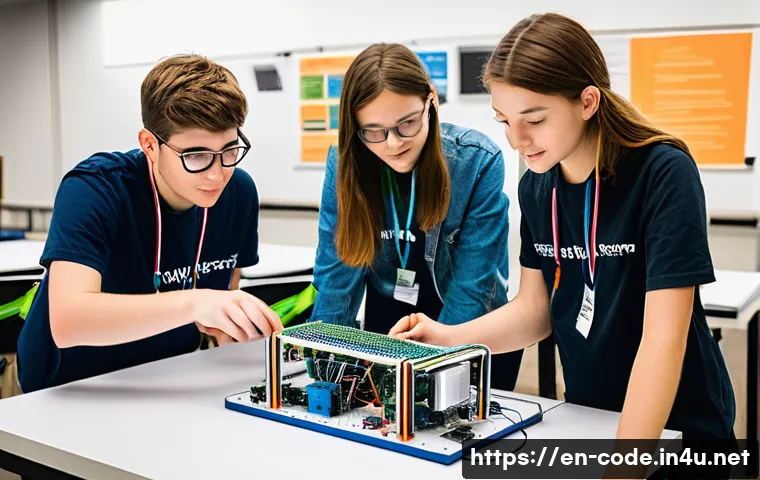
One of the unexpected bonuses of project-based learning, which I quickly learned to leverage, is the incredible power of collaboration. When students are working on a shared project, or even individual projects with a common goal, they naturally start helping each other.
I used to think I had to be the sole fount of knowledge, but that’s just not true, nor is it efficient. Now, I actively encourage pair programming and small group work.
I’ve seen hesitant learners open up and contribute confidently when a peer explains a concept in their own words, perhaps in a way that resonates more than my formal instruction.
It’s like a mini-support network forming right there in the classroom! When one student struggles with a bug, another might jump in, offering a fresh perspective or spotting a simple typo.
This not only builds their debugging skills but also fosters a sense of community and shared accomplishment. It feels less like a hierarchical classroom and more like a real-world development team.
I even noticed that my more advanced students solidify their own understanding by teaching others, and my struggling students gain confidence knowing they’re not alone.
It’s a win-win situation that boosts engagement and deepens learning for everyone involved.
Gamify Your Classroom: Turning Code into Play
Injecting Fun with Challenges and Rewards
Let’s face it, sometimes learning can feel like a chore. That’s why I’ve become a huge fan of gamification in my coding classes. It’s not about turning every lesson into a video game, but about integrating elements of game design to boost motivation and make the learning process more enjoyable.
Think about it: who doesn’t love a good challenge, a sense of progression, or a well-earned reward? I started by introducing small coding challenges, almost like mini-quests, where students could earn “points” for solving problems efficiently or coming up with creative solutions.
These points weren’t just arbitrary; they could unlock access to more advanced topics, bonus project ideas, or even virtual badges that recognized their skills in specific areas like “Debugging Master” or “Algorithm Ace.” The competitive (but friendly!) aspect often kicks in, and I’ve seen students push themselves far beyond what they thought they were capable of, just to beat their previous score or achieve the next “level.” It transforms the learning experience from a series of tasks into an engaging adventure.
This approach taps into our natural desire for accomplishment and recognition, making the learning journey feel less like work and more like play, which, in my experience, dramatically increases engagement and retention.
Leaderboards, Levels, and Badges: Tracking Progress Visually
One of the most effective gamification tools I’ve utilized is the visual tracking of progress. Humans are inherently visual creatures, and seeing how far you’ve come, or where you stand among your peers, can be a massive motivator.
I’ve experimented with simple leaderboards (anonymized, of course, to maintain a positive environment!) that track progress on coding challenges, or “levels” that students advance through as they master new concepts.
It gives them a clear path forward and a tangible sense of achievement. Imagine completing a module and seeing a “Module 1 Complete!” badge pop up, or watching your name climb the leaderboard for a particularly tricky debugging challenge.
It creates a narrative around their learning journey, making it feel more like a progression in a game. I’ve noticed that students become more self-directed, constantly checking their progress and seeking out the next challenge.
This also helps with self-assessment; they can clearly see areas where they might need more practice. The visual cues, combined with small, frequent rewards, create a positive feedback loop that keeps them coming back for more, eager to conquer the next coding hurdle and earn their next badge.
Building a Supportive Coding Community
Fostering a Culture of Openness and Peer Support
From my own experience, one of the biggest deterrents to learning something as complex as coding is the fear of making mistakes or feeling stupid. I’ve walked into classrooms where students were afraid to ask questions, worried they’d look silly.
It breaks my heart every time! That’s why creating a genuinely supportive and open community is paramount. I consciously work to cultivate an environment where asking questions is celebrated, not shamed, and where mistakes are seen as learning opportunities, not failures.
I often share my own coding blunders – believe me, I’ve had plenty! – to show them that even experienced developers hit roadblocks. We also set up online forums or Slack channels where students can ask questions outside of class, share interesting code snippets they find, or even just cheer each other on.
I’ve seen students who were initially shy slowly start to contribute, offering help to others, and in turn, feeling more confident about their own abilities.
This peer-to-peer support system is incredibly powerful, because sometimes, hearing an explanation from a classmate who just grasped the concept resonates more deeply than hearing it from the instructor.
It creates a network of support that extends beyond the classroom walls, ensuring no one feels isolated or left behind.
Mentorship Moments: Connecting with Experienced Coders
To truly broaden their horizons and deepen their sense of belonging, I’ve made an effort to introduce my students to the wider coding community. This often involves inviting guest speakers – local developers, software engineers, or even recent graduates who are now working in the tech industry – to share their experiences.
There’s something incredibly inspiring about hearing directly from someone who is actively doing what you’re trying to learn. These “mentorship moments,” even if brief, provide invaluable insights into career paths, industry trends, and the realities of being a developer.
I’ve noticed that students often have questions for these guest speakers that they might not feel comfortable asking me, like “What’s it really like working at a tech company?” or “How did you get your first job?” It demystifies the profession and makes the goal of becoming a coder feel much more achievable.
Sometimes, these interactions even lead to informal mentorships or internships, opening doors that students might not have otherwise found. It’s about showing them that they’re not just learning code in a vacuum; they’re joining a vibrant, welcoming community of problem-solvers and innovators.
Feedback That Fuels Growth, Not Frustration
Timely, Specific, and Actionable Guidance
Let’s be real: receiving feedback can sometimes feel like a judgment, especially when you’re a beginner. I know I used to dread getting papers back in school!
So, when it comes to coding, I’ve really focused on making feedback a powerful tool for growth, not a source of frustration. The key, I’ve found through trial and error, is making it timely, specific, and actionable.
Waiting weeks to return an assignment is a surefire way to kill motivation. When I give feedback, I try to do it quickly, while the concepts are still fresh in their minds.
More importantly, it’s not just about pointing out what’s wrong; it’s about explaining *why* it’s wrong and, crucially, *how* they can fix it. Instead of just saying “This code doesn’t work,” I might say, “Your loop isn’t iterating correctly because your conditional statement ‘i < 5’ should be ‘i <= 5’ to include the fifth element, causing an off-by-one error here.
Try adjusting that and see if it resolves the issue.” This kind of specific guidance empowers them to debug and learn from their mistakes. It transforms feedback from a grade into a learning opportunity, helping them develop the critical thinking skills essential for any developer.
Embracing a Growth Mindset and Iterative Improvement
Beyond just fixing bugs, feedback is also a fantastic opportunity to instill a growth mindset. In the real world of software development, iteration is king.
No one writes perfect code on the first try! I constantly remind my students that coding is an iterative process, much like writing or designing. We’re always refining, always improving.
When I give feedback, I frame it as a step in that iterative process. It’s not “you failed,” it’s “here’s how you can make this even better in the next version.” I encourage them to resubmit assignments after incorporating feedback, even if it’s just for a small improvement.
This not only reinforces the learning but also teaches them resilience and the importance of continuous improvement. I’ve seen students’ confidence soar when they realize that making mistakes isn’t a sign of failure, but a necessary part of learning and mastery.
This approach to feedback makes the entire learning journey feel less like a series of pass/fail tests and more like a collaborative effort to continuously improve their skills and understanding, which is incredibly motivating for long-term engagement.
Unlocking Creativity: Empowering Self-Directed Exploration
Giving Students the Reins: Choice and Autonomy
One of the most profound lessons I’ve learned in fostering engagement is the incredible power of giving students autonomy. We all crave a sense of control over our learning, don’t we?
When I started my journey as a coding educator, I was probably a bit too prescriptive, laying out every step. But I quickly realized that true engagement blossoms when students feel like they have a say in their learning path.
It’s about giving them the reins, letting them explore topics and projects that genuinely pique their interest. Instead of rigid assignments, I now offer choices within broad themes.
For example, after covering the basics of web development, I might say, “Now, build any kind of personal portfolio website you want. Focus on showcasing your passions, whether it’s gaming, art, or even cooking!” The variety of projects that emerge is astounding, and the level of dedication they show is off the charts.
When they’re building something they truly care about, the effort they put in, the problems they solve independently, and the creative solutions they devise are far beyond what a mandatory assignment could ever elicit.
It’s about empowering them to be the architects of their own learning.
Nurturing Innovative Problem-Solving
Beyond just choosing a project, I also encourage students to find their own solutions to challenges. While I’m always there to guide, I resist the urge to immediately provide the “correct” answer.
Instead, I ask probing questions: “What have you tried so far?” “What does this error message tell you?” “Where could you look for a solution?” This approach might feel slower at first, but it’s vital for cultivating innovative problem-solvers.
I’ve witnessed students stumble, get frustrated, and then, after a moment of intense thought or a quick search online, their eyes light up with an “aha!” moment as they crack the code themselves.
That feeling of independent accomplishment is incredibly powerful and builds resilience. For instance, when we were working on a data visualization project, one student wanted to create a highly specific type of interactive chart that wasn’t covered in our curriculum.
Instead of telling them it was too advanced, I pointed them towards documentation and online communities. They spent hours exploring, eventually figuring it out, and creating something truly unique.
This kind of self-directed exploration not only deepens their technical skills but also fosters a mindset of curiosity and persistence that’s essential for any future coder.
The Secret Sauce: Mentorship and Real-World Connections
Beyond the Textbook: Learning from Industry Pros
I’ve always believed that while textbooks and exercises are foundational, true learning often happens when theory meets reality. That’s why I’m always on the lookout for ways to bridge the gap between our classroom and the bustling world of tech.
Inviting guest speakers from various industries – a software engineer from a local startup, a data scientist from a large corporation, even a freelance web developer – has been incredibly impactful.
These professionals share their real-world projects, the challenges they face daily, and how they use the very concepts we’re learning in class. It’s one thing for me to talk about the importance of clean code; it’s another for a seasoned developer to explain how it impacts team collaboration and project timelines in a multi-million dollar venture.
I’ve noticed a palpable shift in my students’ attentiveness during these sessions. They ask questions they might never think to ask me, like “What’s your biggest coding mistake and what did you learn?” or “How do you stay updated with new technologies?” These conversations provide invaluable context and paint a vivid picture of the career paths open to them, making their learning journey feel incredibly relevant and purposeful.
Internships and Collaborative Projects: Taste of the Future
The ultimate real-world connection, in my opinion, comes through hands-on experience, whether it’s a short-term internship or collaborative projects with local businesses or non-profits.
While these opportunities might seem daunting to set up, I’ve personally seen the immense benefits. Even a small project, like building a simple website for a community center or creating a data entry tool for a local charity, can be transformative.
Students get to work with real clients, understand project requirements, and navigate the nuances of working in a team environment outside the classroom.
I recall a group of students who worked with a small bakery to digitize their inventory system. They faced unexpected bugs, client requests that changed midway, and the pressure of a real deadline.
But the sense of accomplishment when they delivered a functional solution was indescribable. It’s not just about applying their coding skills; it’s about developing soft skills like communication, problem-solving under pressure, and teamwork, all of which are absolutely critical in the professional world.
These experiences give them a tangible portfolio piece and a confidence boost that’s hard to achieve through academic exercises alone, making them feel like genuine contributors to the tech landscape.
Troubleshooting Like a Pro: Fostering Resilience
Embracing the “Bug Hunt” Mentality
If there’s one skill that separates a struggling coder from a thriving one, it’s the ability to troubleshoot effectively. Let’s be honest, everyone writes bugs – even the most seasoned developers!
I’ve certainly spent countless hours staring at my screen, wondering why my perfectly logical code just wasn’t doing what I wanted. Early in my teaching career, I saw how easily students would get disheartened by error messages.
It was like a brick wall. So, I started reframing debugging not as a punishment, but as an exciting “bug hunt” or a detective game. Instead of just fixing their code for them, I teach them a systematic approach: “What’s the error message telling you?” “Where did you last make a change?” “Can you isolate the problem?” We break down complex problems into smaller, manageable chunks.
I’ve even set up “bug bounty” challenges where students earn points for finding and fixing particularly tricky errors in sample code. This shifts their perspective from dread to determination.
They learn that every bug is a puzzle to be solved, and every solved bug is a victory that deepens their understanding. This mindset is crucial because it builds resilience, a quality that is absolutely indispensable in the fast-paced world of technology.
Leveraging Resources: Documentation, Forums, and AI Tools
In today’s coding world, knowing *how* to find solutions is often as important as knowing the solutions themselves. I mean, nobody memorizes every single syntax rule or library function, right?
I certainly don’t! That’s why I dedicate time to teaching students how to effectively leverage the vast resources available to them. We spend sessions exploring official documentation for programming languages and frameworks, dissecting examples, and understanding how to navigate developer forums like Stack Overflow.
I teach them the art of crafting effective search queries – a skill that’s more valuable than many realize! More recently, I’ve also introduced them to using AI-powered coding assistants responsibly, not as a shortcut to avoid learning, but as a tool to understand concepts better, debug more efficiently, or explore alternative solutions.
The goal is to empower them to be self-sufficient learners and problem-solvers. I’ve seen firsthand how students who master these resource-finding skills become incredibly independent and capable.
They stop relying solely on me for answers and instead become proactive in their learning, demonstrating a level of autonomy that prepares them perfectly for the continuous learning curve of a tech career.
| Engagement Strategy | Key Benefits for Learners | Why I Love It |
|---|---|---|
| Project-Based Learning | Develops problem-solving, creativity, and collaboration skills. Fosters ownership and deep understanding. | Transforms passive learners into active creators, leading to genuine “aha!” moments. |
| Gamification | Increases motivation, makes learning fun, and provides clear progress tracking. | Turns challenging concepts into exciting quests, boosting perseverance and enjoyment. |
| Real-World Connections | Demonstrates practical application, relevance, and potential career paths. | Students see the “why” behind their learning, making it feel meaningful and purposeful. |
| Supportive Community | Reduces fear of failure, encourages peer learning, and builds confidence. | Creates a safe space where everyone feels empowered to ask questions and grow together. |
| Actionable Feedback | Guides improvement, builds resilience, and promotes a growth mindset. | Helps students learn from mistakes efficiently and continuously refine their skills. |
Closing Thoughts
Whew, what a journey we’ve covered today! From making abstract code feel tangible to building vibrant communities, it’s clear that successful coding education is less about strict rules and more about human connection. I genuinely believe that by embracing these strategies – making learning relatable, hands-on, and incredibly supportive – we’re not just teaching code; we’re igniting passions, building confidence, and empowering a new generation of innovators. It’s been amazing to see these approaches transform reluctant learners into enthusiastic creators, and honestly, that’s the real magic of it all.
Useful Information to Know
1. Join Online Coding Communities: Platforms like Stack Overflow, GitHub, and Reddit’s programming subreddits are goldmines for troubleshooting, learning best practices, and connecting with fellow developers. Don’t be shy; ask questions and even try to answer others’ queries. It’s a fantastic way to learn and grow.
2. Start Small with Personal Projects: Instead of aiming to build the next big app immediately, begin with small, manageable projects that genuinely interest you. A simple calculator, a personal website, or a short script to automate a tedious task can provide immense satisfaction and practical learning.
3. Master Version Control (Git/GitHub): This is non-negotiable for any aspiring developer. Learning Git allows you to track changes in your code, collaborate with others seamlessly, and revert to previous versions if something goes wrong. Plus, a well-maintained GitHub profile is a powerful portfolio.
4. Prioritize Foundational Concepts: It’s easy to get caught up chasing the latest frameworks or libraries. While they’re important, a strong grasp of core programming concepts (data structures, algorithms, object-oriented principles) will serve you far better in the long run, making it easier to adapt to new technologies.
5. Embrace Continuous Learning: The tech landscape evolves rapidly. Make learning a habit, whether it’s through online courses, tech blogs, podcasts, or experimenting with new tools. A curious mind and a commitment to lifelong learning are your greatest assets in this field.
Key Takeaways
Ultimately, engaging learners in coding boils down to making it a deeply human experience. Connect abstract concepts to everyday life, empower students through project-based learning, inject fun with gamification, and build a robust, supportive community. Offer constructive, actionable feedback and champion self-directed exploration. By fostering these elements, we help students not just learn to code, but truly thrive as innovative, resilient problem-solvers, ready to tackle the challenges of tomorrow’s tech world with confidence and enthusiasm.
Frequently Asked Questions (FAQ) 📖
Q: How can I make coding less intimidating and more approachable for beginners?
A: You know, this is probably the question I get asked most often, and for good reason! When I first started teaching, I quickly learned that throwing complex concepts at beginners is a surefire way to shut them down.
My absolute go-to strategy? Start small and make it visual. Forget the heavy theory for a bit.
Think block-based coding platforms like Scratch or even visual drag-and-drop tools that help them grasp logic without getting bogged down in syntax errors.
I remember teaching a group of students who were utterly convinced coding was “too hard.” We started by building a super simple animated story, just moving characters around.
Their faces lit up when they saw their commands come to life! It’s all about celebrating those tiny, early wins and showing them that coding is like solving a fun puzzle, not deciphering an ancient scroll.
We’re building confidence here, brick by brick.
Q: What are some practical ways to keep students engaged when they hit a roadblock or feel overwhelmed?
A: Ah, the dreaded roadblock! Every coder hits them, right? The trick is to turn those frustrating moments into opportunities for growth, and I’ve found a couple of methods that really work wonders.
First, I swear by the “rubber duck debugging” technique – or in our case, having students explain their code line-by-line to a classmate or even to me.
Often, just articulating the problem out loud helps them spot their own mistakes. It’s like magic! Second, I love implementing “challenge tiers” in projects.
So, if the main task is to build a basic game, I’ll have optional “bonus levels” where they can add extra features if they feel up to it. This way, everyone can achieve the core goal, but those who are ready for more can push themselves without feeling pressured or like they’re being left behind.
It gives them autonomy and keeps that spark alive, even when things get tough. Trust me, seeing a student proudly show off a bug they found and fixed themselves is one of the best feelings!
Q: Beyond just syntax, how do I truly ignite a lasting passion for coding in my students?
A: This is the heart of it all, isn’t it? Getting them past the basics is one thing, but making them love coding? That’s the real game-changer.
What I’ve personally found most effective is connecting coding directly to their passions and the real world. Instead of just giving them abstract assignments, I ask them, “What problems do you wish you could solve?” or “What kind of app would make your life easier?” I once had a student who was super into photography, so we worked on a simple program that could resize images in bulk.
Suddenly, coding wasn’t just a school subject; it was a tool to enhance something they already loved! Another powerful strategy is bringing in guest speakers – local developers, entrepreneurs, or even former students who are now thriving in tech.
Hearing their stories, seeing how coding empowers them to create, innovate, and even build careers, really opens their eyes. It transforms coding from a classroom exercise into a tangible pathway to their future, showing them they’re not just learning to code, but learning to create their own destiny.
That’s the secret sauce for a lifelong passion, if you ask me!