Hey everyone! It’s me, your favorite coding enthusiast, back with something truly vital for anyone passionate about nurturing the next generation of tech talent.
In today’s rapidly evolving digital landscape, coding isn’t just a skill; it’s a superpower, and knowing how to effectively teach – and more importantly, how to truly gauge a student’s progress – has become more critical than ever.
I’ve personally navigated the complexities of coding education, and trust me, it’s not always about checking off boxes. It’s about igniting curiosity, fostering problem-solving, and building real-world applicable skills.
The big question is, how do we, as dedicated instructors, move beyond traditional grades to genuinely assess the deep understanding and innovative spirit of our students?
From project-based learning to personalized feedback loops, the methods are constantly evolving. So, if you’ve ever wondered about the cutting-edge strategies and real-life success stories behind evaluating our future coders, you’re in the right place.
We’re going to explore this together right now!
Beyond the Grades: Why Traditional Assessments Just Don’t Cut It for Coders

Okay, let’s get real for a moment. When I first started teaching coding, I found myself instinctively reaching for the old-school methods of assessment – quizzes, midterms, final exams. It’s what we’ve all grown up with, right? But here’s the thing: coding isn’t about memorizing syntax or regurgitating definitions. It’s a dynamic, creative, and often messy process of problem-solving. Trying to grade a student’s ability to build a functional app with a multiple-choice test feels, frankly, ridiculous. I quickly learned that these traditional methods often only scratch the surface, measuring recall rather than genuine understanding or the crucial ability to debug under pressure. They don’t capture the journey, the struggles, the ingenious solutions, or the collaborative spirit that truly defines a great coder. My own experience showed me that many brilliant students, the ones who could tackle complex problems with innovative solutions, would sometimes stumble on a rote test because their strength wasn’t in memorization, but in application and critical thinking. It felt like we were failing to see their true potential, and that realization was a game-changer for my approach.
The Flaws of Rote Learning Metrics
One of the biggest issues I’ve personally encountered is how traditional assessments often overemphasize theoretical knowledge without practical application. You can know all the definitions in the world, but if you can’t write a single line of working code, what’s the point? I remember one student who aced every quiz about Python data structures but completely froze when asked to use them to parse a real-world dataset. It was a stark reminder that simply recalling information doesn’t equate to functional understanding. This kind of assessment can lead to students feeling discouraged, believing they aren’t “good” at coding just because they don’t excel at memorization. It’s a mindset I’ve fought hard to change in my classroom, pushing instead for hands-on engagement and tangible results.
Why Creativity and Problem-Solving Need a Different Lens
Coding is an art form as much as it is a science. It demands creativity to envision solutions and persistence to overcome seemingly insurmountable bugs. Traditional grading rarely has a category for “elegance of solution” or “tenacity in debugging.” Yet, these are the very qualities that distinguish a competent coder from an exceptional one. I’ve witnessed countless students pour hours into refining a user interface or optimizing an algorithm, only to have their efforts reduced to a numerical grade that doesn’t reflect the ingenuity or the sheer grit involved. We need assessment methods that celebrate these unique attributes, encouraging students to explore, experiment, and even fail constructively, knowing that the learning process itself is highly valued.
Project-Based Learning: The Ultimate Playground for Future Coders
If you ask me, there’s no better way to truly gauge a student’s coding prowess than through project-based learning. This isn’t just theory for me; it’s a practice I’ve embraced wholeheartedly, and the results have been phenomenal. Instead of discrete assignments that feel disconnected, students tackle comprehensive projects that mirror real-world development challenges. Imagine giving students the task of building a simple e-commerce site or a social media clone. Suddenly, they’re not just writing lines of code; they’re designing databases, thinking about user experience, integrating APIs, and debugging complex systems. It forces them to synthesize all their learned skills and apply them in a meaningful context. I’ve seen students’ eyes light up when they realize their code can actually do something, that it can solve a tangible problem or create something new. This hands-on approach naturally fosters a deeper understanding and a sense of ownership over their work, which is something you just can’t get from a textbook exercise.
Fostering Real-World Application and Design Thinking
The beauty of projects lies in their ability to bridge the gap between abstract concepts and practical applications. When students are tasked with, say, building a simple weather app, they don’t just learn about API calls; they learn about parsing JSON data, handling errors, and presenting information clearly to a user. This immediately brings the abstract concept to life. Moreover, projects encourage design thinking – students have to plan, iterate, and refine their work, often dealing with evolving requirements just like in a professional setting. I’ve seen some incredible design choices and problem-solving strategies emerge from these project environments, which would have remained hidden under a traditional testing model. It also teaches them about the entire development lifecycle, from initial idea to final deployment, which is an invaluable experience for any aspiring developer.
Collaboration and Version Control in Action
Another huge benefit I’ve personally observed is how project-based learning naturally integrates collaborative skills and the use of version control systems like Git. In the professional coding world, rarely does anyone work in isolation. Projects provide the perfect arena for students to learn how to work effectively in teams, delegate tasks, merge code, and resolve conflicts. I make it a point to have my students work in small groups on larger projects, and it’s incredible to watch them navigate the complexities of team dynamics and shared codebases. They learn the importance of clear communication, proper branching strategies, and handling pull requests – skills that are absolutely essential in any modern development team. The soft skills they pick up here, from communication to conflict resolution, are just as important as the hard coding skills.
The Power of Peer Reviews: Learning from Each Other, The Right Way
Honestly, one of the most underrated tools in my teaching arsenal has been peer review. When I first introduced it, there was a bit of skepticism from students – “Are *we* supposed to grade each other?” But once they understood the purpose, it transformed into one of the most effective learning experiences. Peer review isn’t about assigning a grade; it’s about providing constructive feedback, identifying areas for improvement, and learning from different approaches to problem-solving. When a student reviews a classmate’s code, they’re forced to critically analyze someone else’s logic, spot potential bugs, and suggest optimizations. This process solidifies their own understanding and often exposes them to coding patterns or solutions they hadn’t considered. I’ve found that students are often more receptive to feedback from their peers because it feels less like a judgment and more like collaborative learning. It creates a supportive community where everyone is invested in each other’s success, which is incredibly powerful.
Cultivating Critical Analysis and Constructive Feedback Skills
Teaching students how to give and receive constructive criticism is a skill that transcends coding and will serve them well in any career path. Through peer reviews, they learn to articulate their thoughts clearly, identify specific issues rather than vague complaints, and offer actionable suggestions for improvement. I always provide a rubric or guidelines for what constitutes good feedback, emphasizing politeness, specificity, and focusing on the code rather than the coder. I’ve seen students evolve from simply saying “this doesn’t work” to providing detailed explanations like “Line 27, your loop condition might lead to an off-by-one error when the array is empty because the index starts at zero.” This level of detail is invaluable both for the reviewer and the reviewee, enhancing everyone’s understanding of coding best practices and common pitfalls. It also develops a crucial eye for detail that is a hallmark of an expert developer.
Expanding Perspectives Through Diverse Coding Approaches
What I find particularly fascinating about peer review is how it exposes students to a multitude of approaches to solving the same problem. Every coder has a slightly different style, a unique way of thinking through logic or structuring their code. When students review each other’s projects, they often discover elegant solutions they hadn’t considered or identify areas where their own code could be more efficient or readable. This broadens their perspective beyond just “my way” and encourages them to explore different paradigms and techniques. It’s like having dozens of extra teaching assistants, each bringing their own unique insights to the table. This diversity in problem-solving not only improves individual code quality but also enriches the collective knowledge of the entire class, making everyone a stronger coder in the process.
Gamification and Coding Challenges: Making Learning an Adventure
Let’s face it, learning to code can sometimes feel like a grind, especially when tackling complex concepts. That’s why I’ve been experimenting with gamification and coding challenges, and honestly, it’s been a game-changer for engagement. Turning coding into a series of quests, puzzles, or competitive challenges injects a massive dose of fun and motivation into the learning process. It’s not about grades anymore; it’s about conquering a level, earning badges, or topping a leaderboard. This approach taps into our innate desire for achievement and friendly competition, pushing students to explore beyond the basic requirements. I’ve seen students spend hours outside of class time trying to solve a particularly tricky coding puzzle, driven not by the fear of a bad grade, but by the sheer thrill of cracking the code. It makes the learning journey feel less like work and more like an exciting adventure, which is exactly what we want for future innovators.
Engaging Students with Interactive Learning Platforms
Modern interactive learning platforms are absolute goldmines for gamifying coding education. Think about platforms that offer coding challenges, instant feedback, and progress tracking. They often incorporate elements like points, levels, and leaderboards, which I’ve found incredibly effective at keeping students hooked. It’s like playing a video game, but instead of defeating monsters, they’re defeating bugs and writing elegant code. I’ve personally used platforms that provide immediate feedback on code submissions, telling students exactly where their solution went wrong or if it could be optimized. This instant gratification and guided correction are far more effective than waiting days for a graded assignment. It empowers students to iterate quickly, learn from their mistakes in real-time, and steadily build their skills in a low-pressure, high-engagement environment. It’s a fantastic way to build foundational skills before diving into larger, more complex projects.
The Thrill of Competitive Coding and Hackathons
For those students who really catch the coding bug, competitive coding challenges and hackathons can be incredibly stimulating. These events push students to think on their feet, collaborate under pressure, and produce working prototypes in a short amount of time. I’ve encouraged many of my students to participate in local hackathons, and the stories they come back with are always inspiring. They talk about the adrenaline rush, the creative problem-solving, and the incredible satisfaction of building something tangible from scratch in just a day or two. It’s an intense learning experience that hones their skills in rapid prototyping, teamwork, and effective time management. Plus, it’s a fantastic way for them to network with peers and industry professionals, opening doors to future opportunities. The real-world stakes, even if just for bragging rights, can be a powerful motivator.
Personalized Feedback Loops: Tailoring Growth for Every Student
One size never fits all, especially when it comes to learning and improvement in coding. This is where personalized feedback loops become absolutely invaluable. I’ve found that generic comments on assignments just don’t cut it. To truly help a student grow, the feedback needs to be specific, actionable, and tailored to their individual progress and learning style. Instead of just marking something “wrong,” I focus on explaining *why* it’s wrong, suggesting alternative approaches, and even providing resources for further learning. This might involve one-on-one discussions, detailed comments directly in their code, or even short video explanations. My goal is to transform feedback from a judgment into a guiding conversation, helping students understand their strengths and pinpoint areas where they can improve with targeted effort. It’s a more time-intensive approach, for sure, but the impact on student learning and confidence is immeasurable.
Moving Beyond Red Pen Marks: Actionable and Encouraging Feedback
I’ve personally moved away from just slapping a grade and a few red marks on code. My approach now is to provide what I call “growth-oriented feedback.” This means highlighting what they did well first, building their confidence, and then gently guiding them through areas that need improvement. For instance, instead of just saying “Your code is inefficient,” I might say, “Your current loop runs in O(n^2) time. Consider using a dictionary for faster lookups to bring it closer to O(n).” I often include specific code examples or links to documentation. This kind of precise, actionable feedback empowers students to learn from their mistakes rather than just feeling deflated by them. It’s about showing them the path to mastery, not just pointing out their missteps. I’ve noticed a significant increase in students actually *applying* the feedback when it’s delivered in this constructive and supportive manner.
Utilizing Tools for Efficient and Effective Feedback Delivery
Let’s be honest, giving personalized feedback to a large class can be a huge time sink if you’re not smart about it. That’s why I’ve explored and adopted various tools to make this process more efficient without sacrificing quality. Code review platforms, for example, allow me to comment directly on specific lines of code, making the feedback highly contextual. Some even support video comments, which can be incredibly effective for explaining complex concepts or demonstrating fixes. I also use templated feedback for common issues, which saves time, but I always make sure to personalize each template with specific examples from the student’s work. These tools help streamline the process, allowing me to provide detailed, individualized feedback to every student without getting completely overwhelmed. It means I can focus more on the *quality* of the feedback rather than the *quantity* of time it takes to deliver it.
Showcasing Talent: Building Portfolios and Real-World Applications
In the professional coding world, your grades from school eventually matter far less than what you can actually build and demonstrate. That’s why I strongly emphasize the creation of personal coding portfolios. Think of it as a coder’s resume, but instead of just bullet points, it’s filled with tangible proof of their skills and creativity. From the very beginning, I encourage students to document their projects, no matter how small, and to host them online. This could be a personal website, a GitHub profile, or a collection of deployed web applications. It’s about moving beyond theoretical exercises and creating real-world applications that solve problems, demonstrate understanding, and showcase their unique coding style. I’ve seen students land internships and even jobs purely based on the strength and ingenuity of their personal projects, often overshadowing their academic transcripts. It’s incredibly empowering for them to see their work out there, making a difference or simply existing as a testament to their dedication.
Curating an Impressive Digital Portfolio
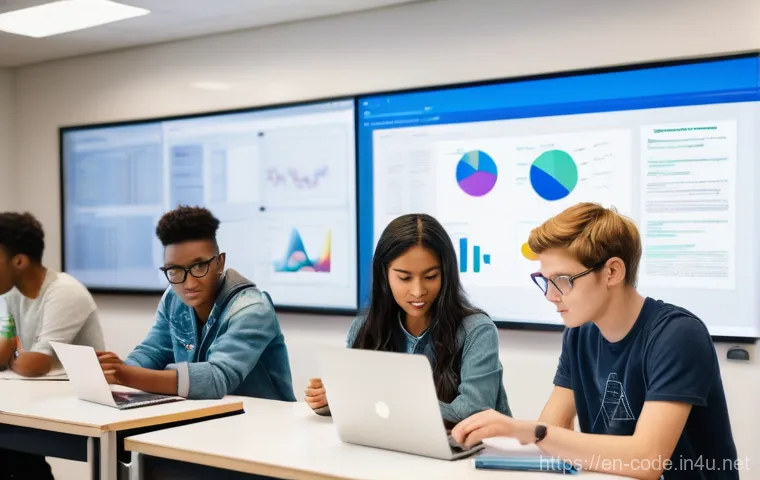
I guide my students through the process of curating an impressive digital portfolio, emphasizing not just the quantity but the quality and presentation of their projects. This means more than just uploading code to GitHub; it means writing clear README files, documenting the project’s purpose and technologies used, and ideally, providing live demos or clear screenshots. I encourage them to include a variety of projects that showcase different skills – perhaps a web development project, a data analysis script, and a small game. The goal is to paint a comprehensive picture of their abilities and interests. I’ve found that students who take pride in their portfolios often put in extra effort to polish their projects, knowing that potential employers or collaborators will be viewing their work. This self-driven motivation leads to higher-quality work and a deeper sense of accomplishment, which is what we want for them.
Deploying Applications and Impacting the Real World
There’s nothing quite like the feeling of seeing your code run live, out there in the real world. That’s why a critical part of my curriculum involves guiding students through the process of deploying their applications. Whether it’s a simple static website hosted on GitHub Pages or a dynamic web app running on a cloud platform like Heroku or Vercel, the act of deployment is incredibly educational. It forces them to think about server environments, domain names, continuous integration, and all the “DevOps” aspects that make a project truly production-ready. I’ve personally helped students launch small tools, personal blogs, and even community projects that are actively used by others. The feedback they receive from real users, even if it’s just friends and family, is invaluable. It shifts their perspective from merely writing code to creating solutions that have a tangible impact, which is an amazing motivator and a huge confidence booster.
Observational Assessments: Seeing the “Aha!” Moments Unfold
Sometimes, the best way to assess a student’s coding ability isn’t through a formal test or even a project submission, but through simple observation. I know, it sounds a bit old-fashioned, but hear me out. As an instructor, spending time walking around the classroom, watching students code, asking questions, and listening to their thought processes provides an incredibly rich source of assessment data. You can see their problem-solving strategies in real-time, identify where they get stuck, and witness those incredible “aha!” moments when a complex concept finally clicks. This kind of ongoing, informal assessment allows me to understand individual learning curves, spot common misconceptions, and offer immediate, targeted support. It’s like being a coach on the sidelines, watching the game unfold and offering advice exactly when it’s needed. This personal interaction builds a strong rapport and trust, making students more comfortable asking for help and experimenting with new ideas.
Uncovering Thought Processes Through Live Coding Sessions
I’ve found immense value in incorporating live coding sessions or pair programming into my classes, which inherently lends itself to observational assessment. When students are coding in front of me or a partner, I can ask them to “think aloud.” This allows me to understand their logical flow, how they approach a problem, and even where their misconceptions lie, far better than just looking at a finished piece of code. For example, I might see a student trying a complex nested loop when a simpler dictionary lookup would suffice. By asking, “What are you trying to achieve here? Have you considered X instead of Y?”, I can gently guide them to a more efficient solution while understanding their original reasoning. This direct insight into their cognitive process is invaluable for truly effective teaching and assessment, allowing me to address their specific learning needs in real-time. It’s a fantastic diagnostic tool that goes beyond just correctness to understanding *why* they chose a particular path.
Identifying and Addressing Learning Hurdles in Real-Time
The beauty of observational assessment is its immediacy. When I see a student repeatedly struggling with a specific concept – say, understanding recursion – I don’t have to wait for a graded assignment to identify the issue. I can step in right away, offer an alternative explanation, provide a different example, or pair them with a peer who has grasped the concept. This proactive intervention is far more effective than waiting until a major project deadline, by which point the student might be deeply frustrated or falling behind. It allows me to tailor my teaching on the fly, adjusting my explanations or providing additional resources based on the real-time needs of the students. This kind of immediate support is crucial in coding, where one missed concept can quickly derail a student’s progress and confidence. It’s about preventing problems before they become insurmountable barriers.
Here’s a quick overview of how traditional and modern assessment methods stack up:
| Assessment Aspect | Traditional Methods (e.g., Exams) | Modern Coding Assessments (e.g., Projects, Peer Review) |
|---|---|---|
| Skills Measured | Memory, theoretical recall, basic syntax knowledge. | Problem-solving, critical thinking, creativity, application of knowledge, collaboration, debugging, project management. |
| Learning Impact | Often promotes rote memorization; can induce anxiety. | Encourages deep understanding, experimentation, iterative learning, and self-correction. |
| Feedback Type | Delayed, summative (focus on outcome); often limited in detail. | Immediate, formative (focus on process); detailed, actionable, and personalized. |
| Engagement Level | Can be low, often seen as a chore. | High, often seen as a challenging and rewarding activity. |
| Real-World Relevance | Limited; rarely reflects actual job tasks. | High; mirrors actual software development practices and challenges. |
| EEAT Contribution | Low experience, limited authority demonstration. | High experience (hands-on), demonstrates expertise and builds real-world authority. |
Cultivating a Growth Mindset: Beyond the Pass/Fail Paradigm
If there’s one thing I’ve learned from years of guiding aspiring coders, it’s that a growth mindset is absolutely essential. The traditional pass/fail mentality of assessments can be incredibly damaging in coding education. Coding is inherently about trial and error, about iterating and improving. Failing is not just a possibility; it’s a necessary part of the learning process. When a student sees a “failed” project or a bug-ridden piece of code not as an end, but as an opportunity to learn and grow, that’s where the real magic happens. My role, and the goal of our assessment methods, is to foster an environment where experimentation is encouraged, mistakes are seen as learning moments, and persistence is celebrated. It’s about shifting the focus from simply getting the “right” answer to understanding the journey and the continuous improvement that defines a skilled developer. I always tell my students, “Every bug you fix makes you a better coder.”
Embracing Failure as a Stepping Stone to Success
I distinctly remember a student who spent days trying to fix a persistent bug in their project. They were incredibly frustrated, almost ready to give up. Instead of just giving them the answer, I sat with them, asking guiding questions and encouraging them to explain their debugging process. When they finally found and fixed the bug, the sense of accomplishment was palpable. That experience taught them more about problem-solving and resilience than any perfectly working assignment ever could. This is why I actively encourage students to embrace failure. It’s not a setback; it’s a diagnostic. Each error message, each non-working piece of code, provides valuable information. By reframing failure as a learning opportunity, we empower students to persevere through challenges and develop the grit needed to become successful developers. It builds resilience, which is a key trait in the fast-paced world of technology.
Fostering Resilience and Persistence in Debugging
Debugging, in my opinion, is perhaps the most crucial skill a coder can develop. And it’s a skill that is entirely built on persistence and resilience. When code breaks, it can be incredibly disheartening, especially for beginners. My approach to assessment therefore includes observing and supporting their debugging process, rather than just marking down for errors. I want to see *how* they approach fixing a bug – do they read the error messages carefully? Do they use print statements or a debugger? Do they systematically eliminate possibilities? These are the real indicators of a budding developer. I’ve noticed that students who develop strong debugging habits early on become far more independent and confident in their abilities. It’s a skill that they will rely on throughout their entire coding career, and fostering it early through supportive and observed practice is far more impactful than just penalizing for broken code.
The Future of Assessment: Adaptability and Continuous Improvement
As the tech landscape continues to evolve at breakneck speed, so too must our methods for assessing future coders. What worked even a few years ago might not be sufficient today, given the rise of AI tools, new programming paradigms, and an ever-increasing demand for adaptable, innovative thinkers. We can’t afford to be static in our approach. My personal journey as an educator has been one of constant adaptation, trying out new tools, experimenting with different methodologies, and always listening to student feedback. The future of assessment, as I see it, lies in its flexibility and its focus on continuous improvement – both for the student and for the assessment process itself. It’s about building a system that not only measures what students know but also encourages them to become lifelong learners, capable of navigating and contributing to a rapidly changing digital world. This proactive and iterative approach ensures that our assessment practices remain relevant and effective.
Integrating Emerging Technologies into Assessment Practices
The rapid advancement of technologies like AI and automated code analysis presents both challenges and exciting opportunities for assessment. On one hand, tools like GitHub Copilot can assist students in writing code, which means we need to re-evaluate how we test their foundational understanding versus their ability to leverage tools effectively. On the other hand, these very tools can be integrated into our assessment pipelines to provide instant feedback, identify code smells, and even help grade aspects like code quality or complexity. I’ve been experimenting with using automated linters and static analysis tools as part of the submission process, giving students immediate insights into their code’s adherence to best practices. This doesn’t replace human feedback but augments it, allowing me to focus on higher-order thinking and problem-solving during my reviews. It’s about smart integration to enhance learning and streamline evaluation, ensuring our methods keep pace with technological advancements.
Building a Culture of Lifelong Learning and Iteration
Ultimately, the goal of any effective coding education, and its assessment, should be to cultivate a culture of lifelong learning and continuous iteration. The tech world doesn’t stand still, and neither should our students’ learning. Our assessment methods should reflect this reality, emphasizing not just the mastery of current skills but the capacity to acquire new ones. This means assessments that encourage self-directed learning, critical evaluation of new technologies, and a willingness to constantly refine one’s craft. I tell my students that the “final product” in coding is rarely truly final; there’s always room for improvement, optimization, or adding new features. By framing assessments as part of an ongoing learning journey rather than a definitive endpoint, we equip students with the mindset and skills they need to thrive in a perpetually evolving industry. It’s about preparing them not just for their first job, but for a career that demands constant growth and adaptation.
Wrapping Things Up
Whew! What a journey we’ve been on, exploring the ins and outs of truly effective coding assessments. It’s been so rewarding for me to share my experiences and insights with you, moving beyond the rigid structures of traditional grading to embrace approaches that truly foster growth and real-world skills. From diving deep into project-based learning and the magic of peer reviews to sparking joy with gamification and tailoring feedback, it’s clear that the future of coding education is vibrant and dynamic. My hope is that by sharing these reflections, you feel more equipped, inspired, and excited to cultivate the next generation of innovative and resilient developers, just as I strive to do every day. Remember, it’s not just about what they know, but what they can build, debug, and bring to life with passion.
Useful Tips for Aspiring Coders and Educators
Building a Strong Foundation and Mindset
1. Embrace the “Why,” Not Just the “How”: When learning a new concept, always dig deeper than just memorizing the syntax. Understand *why* a particular method or data structure is used, and what problem it solves. This conceptual understanding is far more valuable than rote memorization and will make you a much more adaptable coder. It’s the difference between following a recipe and understanding the art of cooking.
2. Your Portfolio is Your Powerhouse: Start building your project portfolio from day one. Even small, personal projects demonstrate your initiative, skills, and problem-solving abilities far better than any resume bullet point. Deploy them, share them on GitHub, and write clear READMEs. This is your digital handshake with the industry, showcasing what you can truly do.
3. Become a Debugging Detective: Debugging isn’t a chore; it’s an essential skill. Treat every bug like a puzzle to solve. Learn to read error messages, use print statements, and get comfortable with your debugger. The ability to efficiently track down and fix issues will save you countless hours and make you an invaluable team member.
4. Network Like a Pro (Even if You’re an Introvert): Attend virtual meetups, join online communities, and connect with other developers. The tech world thrives on collaboration. You’ll learn about new tools, find mentors, and discover opportunities you never knew existed. Plus, it’s a great way to stay motivated and feel part of something bigger.
5. Never Stop Learning: The tech landscape is constantly evolving. What’s cutting-edge today might be legacy tomorrow. Cultivate a lifelong learning mindset. Dedicate time each week to exploring new frameworks, languages, or tools. Online courses, tutorials, and even just reading documentation can keep your skills sharp and relevant in this fast-paced industry.
Key Takeaways
Redefining Success in Coding Education
As we’ve explored, moving beyond traditional assessments is not just a preference; it’s a necessity for truly preparing future coders. My experience has shown that measuring success solely on exams misses the core competencies of problem-solving, creativity, and collaboration. Embracing methods like project-based learning, where students build tangible applications, allows us to assess their ability to apply knowledge in real-world scenarios, fostering a deeper, more enduring understanding. Peer reviews cultivate critical thinking and communication, vital skills in any development team. Furthermore, gamification and coding challenges ignite passion and intrinsic motivation, transforming learning into an engaging adventure rather than a tedious chore. Finally, personalized feedback, delivered constructively and through efficient tools, ensures that every student receives the targeted guidance they need to grow. Ultimately, fostering a growth mindset, where failure is seen as a learning opportunity and persistence is celebrated, is paramount. By continuously adapting our assessment strategies and integrating new technologies, we equip our students not just for a job, but for a lifelong journey of innovation and contribution in the ever-evolving tech world. This holistic approach ensures we’re not just creating coders, but thoughtful, resilient, and impactful creators.
Frequently Asked Questions (FAQ) 📖
Q: Beyond the Grades: How Can We Truly Measure a Student’s Coding Prowess?
A: Oh, this is such a fantastic question, and honestly, it’s one I’ve grappled with intensely in my own journey as both a learner and an educator. When I first started out, I was totally programmed (pun intended!) to think that grades, quizzes, and multiple-choice tests were the gold standard.
But you know what? They really only scratch the surface. What truly changed my perspective, and what I’ve seen work wonders, is moving towards a project-based assessment model and encouraging digital portfolios.
Imagine a student not just getting a letter grade on a test, but instead presenting a fully functional app they built from scratch, explaining their design choices, their debugging process, and even the features they didn’t manage to implement but learned from.
That’s where the magic happens! I’ve seen students who struggled with traditional tests absolutely light up when they get to pour their heart into a real project.
A well-curated portfolio, showcasing their best work, their growth over time, and even their challenges, speaks volumes more than a single test score ever could.
It allows them to demonstrate their problem-solving skills, their creativity, and their ability to apply concepts, not just memorize them. It’s a game-changer for evaluating their true coding prowess, and trust me, employers these days are far more interested in seeing what someone can do rather than just what grades they got.
Q: Cracking the Code of Critical Thinking: How Do We Evaluate Problem-Solving and Creativity in Our Young Coders?
A: This is where things get really exciting, because it’s about looking past the “what” and diving deep into the “how.” It’s super easy to grade a student on whether their code runs, but how do you assess the ingenuity they poured into it or the tenacity they showed when hitting a roadblock?
From my experience, it all comes down to observation and process-oriented assessments. Think live coding challenges where students walk you through their thought process out loud, debugging sessions where you can see their systematic approach to identifying errors, or even pair programming exercises.
I remember one student, Alex, who wasn’t always the fastest coder, but when it came to a complex bug, he’d meticulously dissect the problem, drawing diagrams, asking insightful questions, and experimenting with different solutions until he cracked it.
That level of critical thinking and creative problem-solving? You just don’t catch that on a written exam. Setting up open-ended challenges where there isn’t just one “right” answer also allows students to flex their creative muscles.
It’s about giving them the space to innovate and then observing how they navigate those challenges, how they break down complex problems, and how they adapt their strategies.
It’s messy, it’s dynamic, and it’s incredibly effective for spotting those truly brilliant minds.
Q: From Classroom to Career: How Do Our
A: ssessment Methods Prepare Students for Real-World Tech Challenges? A3: Alright, this is the million-dollar question, right? Because ultimately, we want our students to be equipped for success not just in our classrooms, but in the fast-paced tech world beyond.
And let me tell you, what works in theory often falls flat in the real world if our assessments don’t bridge that gap. What I’ve found to be incredibly impactful is integrating real-world scenarios and industry-standard practices directly into our evaluation methods.
We’re talking about capstone projects that mimic actual client briefs, hackathon-style challenges that push them to innovate under pressure, and even encouraging contributions to open-source projects.
I’ve personally guided students through “mock client” projects where they had to gather requirements, present prototypes, handle feedback, and then deliver a polished product – just like they would in a junior developer role.
The learning curve is steep, but the growth is exponential! It’s not just about writing clean code; it’s about version control, collaborative tools, presenting their work, and understanding user needs.
When assessments demand these real-world skills, students aren’t just learning syntax; they’re building a professional toolkit. This approach doesn’t just tell us if they know how to code; it tells us if they can thrive as a coder, making them far more valuable and prepared for whatever challenges the tech industry throws their way.